
AI Should know what it’s talking about
Dell Technologies is expanding its AI data platform with capabilities for semantic linking, contextualization, and analysis of enterprise data. This is intended to enable AI agents to operate more reliably, find relevant information faster, and use it more efficiently.
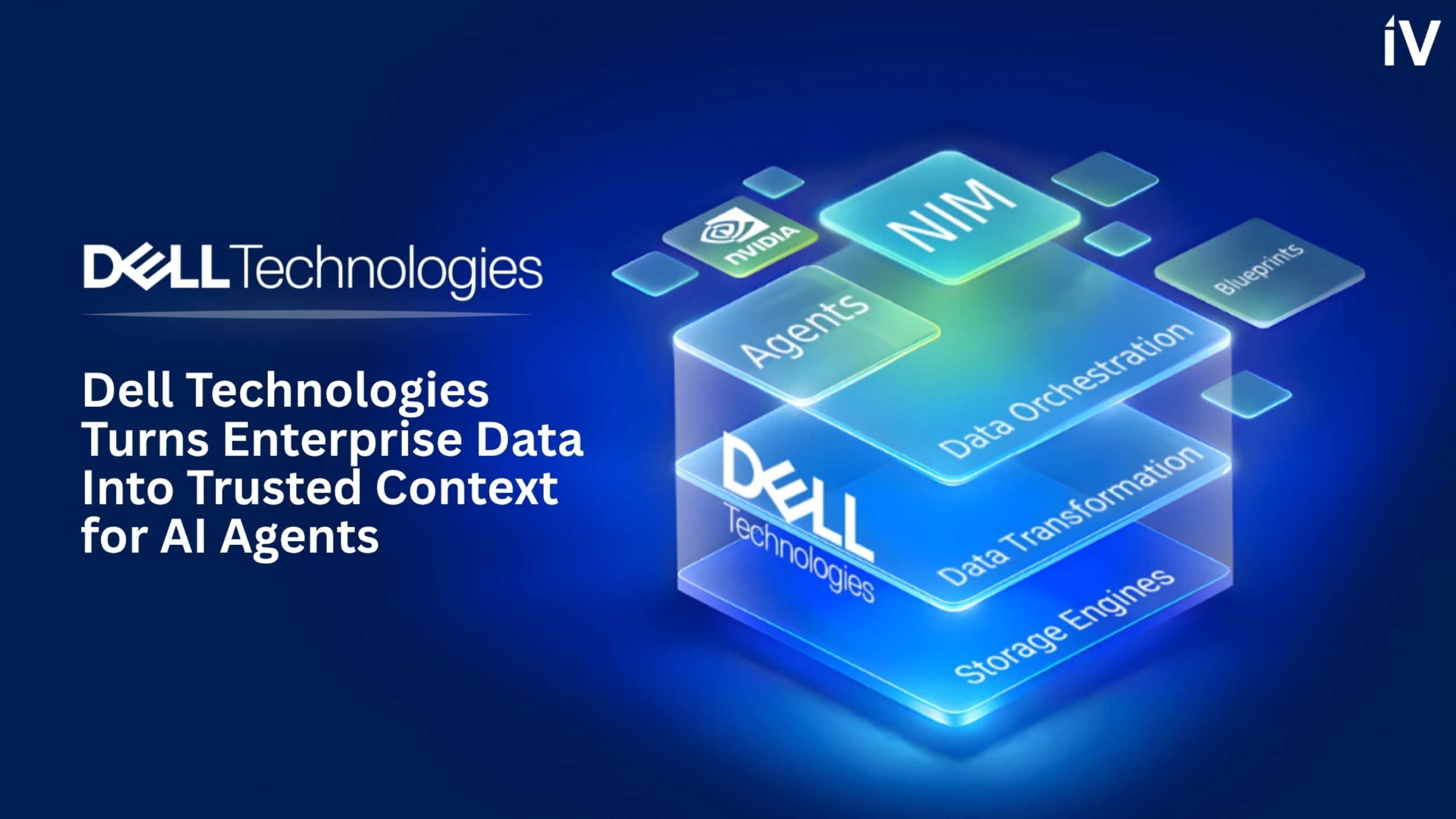
Data is the biggest obstacle to AI adoption in enterprises. Valuable information is scattered across files, databases, cloud services, and systems—often without a consistent structure or context. As a result, AI agents must go to great lengths to reconstruct answers. This consumes tokens, computing power, and time, and compromises the reliability of the results. Dell Technologies is therefore expanding the Dell AI Data Platform to transform enterprise data into a trustworthy, up-to-date context for AI systems. This is intended to enable applications and agents to deliver better answers, operate more cost-effectively, and become productive more quickly.
End-to-End Data Foundation
The Dell AI Data Platform creates an end-to-end data foundation—from storage to use by AI agents. Storage systems deliver critical data without bottlenecks to accelerated computing units. Orchestration capabilities link and prepare the data, while analytics and search functions transform and index it. NVIDIA Nemotron Retriever models handle document parsing, embedding, and reranking. NVIDIA cuVS accelerates vector indexing and search.
All processing steps run on a single platform
All processing steps run on a single platform. This ensures that every context generated can be traced back to the source data controlled by the company. AI agents can thus draw on the same documents, histories, and decisions, rather than having to reconstruct their knowledge from scratch for every query. Without a shared data context, systems must constantly determine: What does a term mean, and how is it related to other information? Dell Technologies is now expanding the Dell AI Data Platform with three new features that create precisely this context.
Unified Semantic Layer
The Unified Semantic Layer ensures that structured and unstructured information is understood consistently across the enterprise—using rules, definitions, and a searchable glossary. For example, if one system refers to a “customer” or “client” and another refers to an “account,” the AI recognizes that they mean the same thing. Users can also import existing ontologies and classification schemas to reuse industry-standard or company-specific taxonomy assets. Dell Technologies also enables the use of NVIDIA Auto-Ontology, an open-source library that creates knowledge graphs from enterprise data to extend the Unified Semantic Layer.
Enterprise Knowledge Graph
The Enterprise Knowledge Graph maps the relationships between structured and unstructured data, enabling an application or agent to find the correct context. Metadata, data provenance, and query history are used to continuously adapt the graph to changing activities. When an agent asks a question, the platform retrieves all relevant information for which it has access permissions. This can include tables, multimodal data, or vector indexes—regardless of where they are stored. For example, when a production worker investigates a problem on a production line, they should be able to trace an unusual sensor reading back to the machine, its repair history, the supplier’s batch, and the affected orders.
Knowledge Agents
Knowledge Agents use this context to perform specific tasks. Each agent acts as a trusted advisor on a specific topic, based on a defined subset of the Enterprise Knowledge Graph. Companies set the rules: What guidelines apply to the agent? What data is it permitted to access? What quality requirements must it meet? And how much information is it allowed to provide? NVIDIA Nemotron Retriever models provide the Knowledge Agents with capabilities for logical reasoning and visual understanding.
In the company’s own data center
The Unified Semantic Layer, the Knowledge Graph, and the Knowledge Agents contain particularly valuable yet sensitive information and therefore remain within the company’s own data center. The platform uses this data to create context, keeps it up to date as business conditions change, and makes it available to all applications and agents—without requiring companies to commit to a specific model, data provider, or storage vendor.