
Always exciting
SCHUNK’s new vise automation system provides a straightforward introduction to automated machine loading and unloading. Precise positioning and clamping, simple robot programming, and a manageable investment are designed to ensure reliable processes and longer machine uptime.
The requirements for machine automation vary depending on the workpiece, batch size, manufacturing process, and desired flexibility. SCHUNK therefore does not pursue a one-size-fits-all approach but offers a tiered portfolio of different automation types: from simple entry-level to high-end solutions. Based on extensive application experience and a broad portfolio of clamping and automation components, SCHUNK enables tailor-made, process-oriented automation concepts. The new vise automation system expands this range with a particularly simple entry-level option: It offers companies a straightforward and low-risk way to automate loading processes quickly, cost-effectively, and with minimal integration effort.
Positioning and Clamping in a Single Operation
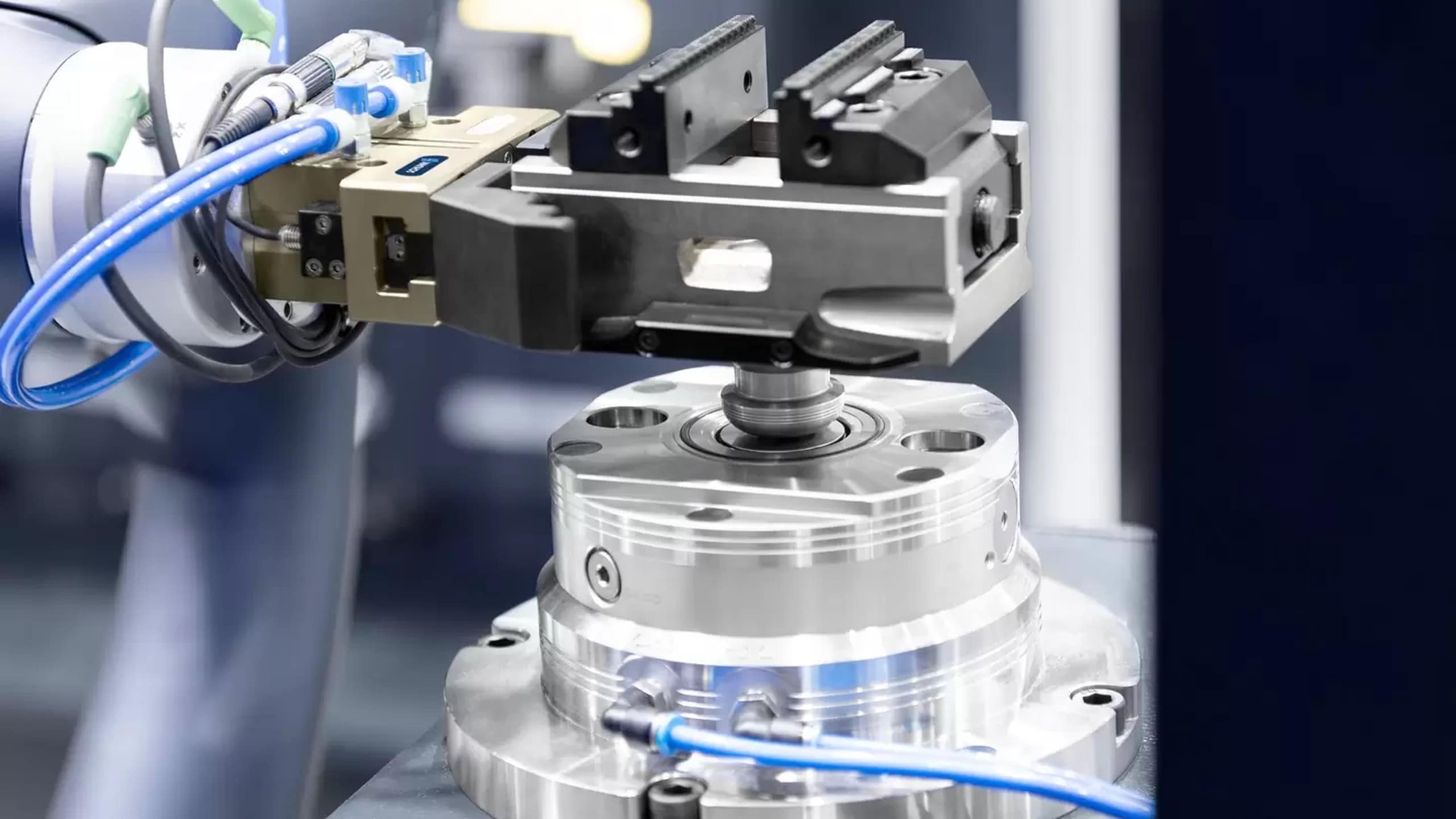
The vise automation system is based on a deliberately simple concept: Workpieces are manually clamped outside the machine into specially prepared vises and then placed in a magazine. A robot equipped with special gripper fingers retrieves the loaded vises and positions them precisely on an elevated VERO-S single-station clamping station on the machine tool’s table. After machining, it returns them, along with the workpiece, to the magazine. Repositioning for machining the underside of the workpiece can be performed both outside and inside the magazine.
Optimal accessibility for machining
At the heart of the vise automation system is the VERO-S clamping station in a cantilever design. It serves as the interface between the robot and the machine tool and enables high-precision positioning and clamping of the vises in a single operation. Thanks to the high clamping forces and the micrometer-precise zero-point interface, the robot picks up and changes the clamping devices with repeatable accuracy at all times. The raised cantilever design provides optimal accessibility for machining all five sides of the workpiece. At the same time, the zero-point clamping module is completely covered by the clamping device. This prevents chip buildup and ensures consistently high process reliability. Depending on the machine type, the cantilever design can be operated via the machine or via the robot.
Reduces the complexity of automation
The critical clamping process remains under the operator’s control. The robot is responsible solely for the reliable handling of the entire vise. Since it always grips the same defined interface and moves to fixed positions, programming is reduced to simple point-to-point movements. This is intended to significantly reduce the complexity of automation and facilitate integration into existing production lines. Since no machine-side media supply is required, the automation system can be flexibly deployed on virtually any machine type.
Longer Machine Uptime, Lower Investment
Vise automation can significantly extend machine uptime. Before the end of a shift, machine operators can prepare several loaded vises in the magazine. The machine then continues to operate autonomously even after the shift ends. This enables companies to increase their productivity without having to hire additional staff.
At the same time, they benefit from a comparatively low investment cost. The entire system consists of standardized components and, thanks to clearly defined interfaces, is easy to program and operate reliably. The combination of low complexity, high process reliability, and cost-effective implementation is designed to make vise automation an attractive entry point into automated machine loading.