
Higher performance, fewer stoppages: Pioneering cable technologies
Cables and wires are far more than simple connecting elements: they are crucial to the reliability and performance of modern industrial plants. What are the requirements for safe and efficient production processes? In this short interview, Dr. Susanne Krichel, Senior Vice President Global R&D at LAPP, explains why modern cable technology is so important.
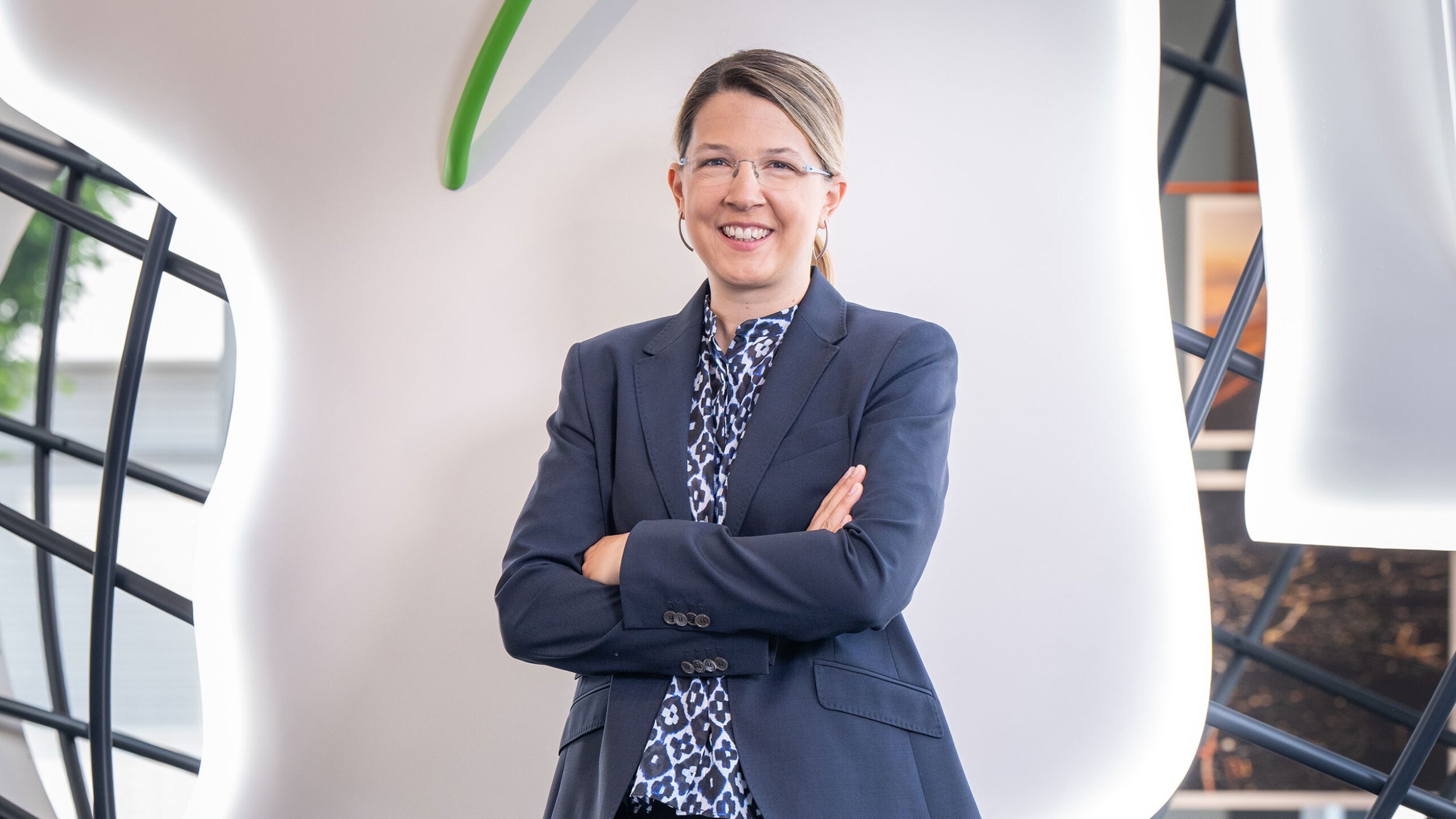
Cables are often regarded as interchangeable mass-produced goods. Where do customers most underestimate the importance of the right connection technology?
Many users still regard cables and wires as standard components and focus primarily on price when making their selection. Yet connection technology often determines the reliability of an entire plant. Particularly in demanding industrial environments, unsuitable cables and wires can lead to unplanned downtime, data loss or increased maintenance costs. The actual costs then arise not from the cable itself, but from production downtime. That is why, at LAPP, we always consider the specific application and develop solutions that are precisely tailored to the respective requirements.
Today, cables must transmit not only electricity but also data and, increasingly, energy for charging infrastructure. How does this fundamentally change the requirements for your connection technology?
The requirements for modern connection technology are becoming increasingly complex. Today, cables and wires must transmit energy, data and signals not only reliably but often simultaneously and under demanding conditions. At the same time, the demands on transmission speed, electromagnetic compatibility, flexibility and sustainability are increasing. For us, this means we take a universal approach to connection technology. It is no longer simply a matter of physically connecting two points, but of providing a secure and high-performance infrastructure for the connected industry and electrification.
Cables are subjected to extreme stress, particularly in moving applications such as robotics or automation. What is the most common problem encountered here, and how does LAPP solve it?
The greatest challenge in moving applications is the constant mechanical stress. Millions of bending, torsion and acceleration cycles can cause material fatigue and, in the worst case, lead to failures. That is why we develop our products specifically for dynamic applications. A concrete example is our mesh3D technology. With this, we have developed an innovative shielding technology that uses a knitted fabric instead of conventional braiding or woven mesh. It offers high flexibility combined with a long service life and excellent shielding performance. Optimized conductor structures and durable sheath materials are also key features of our products for this sector. Through extensive testing under real-world conditions, we ensure that the cables function reliably over the long term, even under high loads. This provides planning certainty for our customers and increases the availability of their systems.