
It gets easier at the top
With its REVO drive concept, the wind turbine brand Winergy from Flender GmbH is presenting a technical innovation: A torque density of 300 Newton meters per kilogram allows for more compact turbine nacelles, lower mass in the tower head, and thus lower costs per kilowatt hour generated.
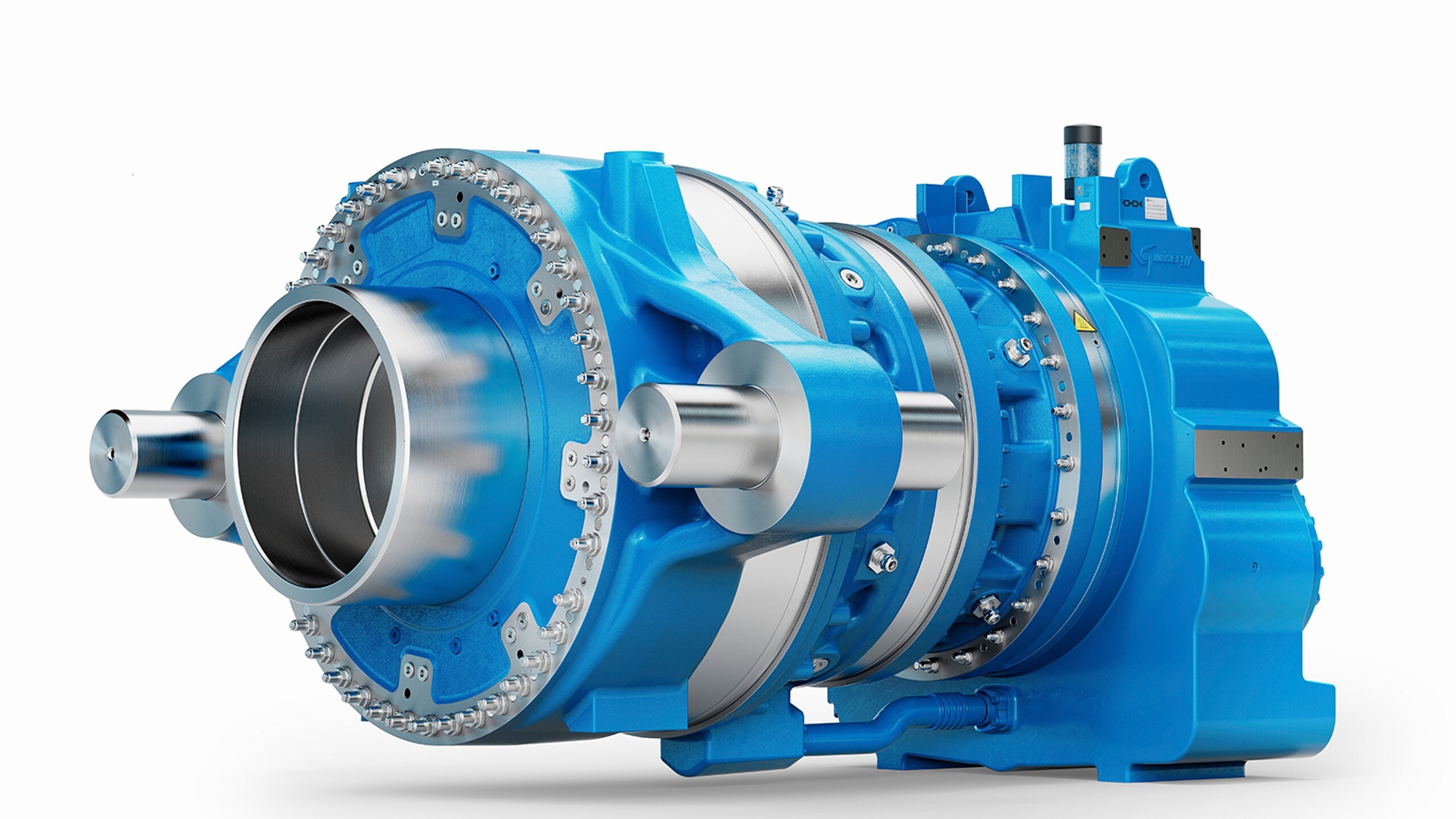
At the heart of the next generation of wind energy is the question: How can turbines be made even more powerful, cost-efficient, and logistically easier to install? The Bocholt-based drive specialist Flender provides the answers with its new REVO concept, which specifically addresses the issues of material efficiency, transportability, and total operating costs. According to the manufacturer, REVO achieves a torque density of 300 Newton meters per kilogram for the first time—an order of magnitude that allows existing compact designs to be significantly further developed.
What does that mean in concrete terms? If more torque is available per kilogram of drive material, gearbox diameters can be reduced by up to 25 percent – with the same performance. This results in several tangible advantages for wind turbines: lower weight in the tower head, simplified transport logistics – especially for large power classes above eight megawatts – smaller nacelles and, ultimately, lower investment and operating costs.
Another major benefit of REVO is the reduced amount of material and the associated CO2 savings: Flender states that, compared to older gearboxes, the CO2 footprint can be reduced by up to 70 percent. In addition, low-noise second-generation plain bearings are integrated – an often underestimated factor in offshore and onshore operations when it comes to operational safety and regulatory requirements, for example in noise protection.
REVO is backed by a global engineering team from Flender; new gear materials, optimized planetary stages, and an integrated manufacturing approach form the basis. Flender's aim is not just to supply a component, but to provide a technologically advanced package for the new generation of wind turbines. The current prototype is on display in Voerde – a symbol of the fact that development has already reached industrial level.
This opens up several strategic options for operators and turbine manufacturers: either more power with the same installation space or the same power with a slimmer design – in each case with the aim of reducing the levelized cost of electricity (LCOE). In a market where margins are under pressure and logistics costs are a significant factor, such a drive concept can represent a real competitive advantage.
With REVO, Flender is pursuing its goal of positioning itself as an innovation driver for the wind energy industry. Anyone who wants to redefine the limits of towers, logistics, and materials will find this concept a promising tool. The next few years will show how quickly the market launch will succeed and which turbine generations will benefit from it.